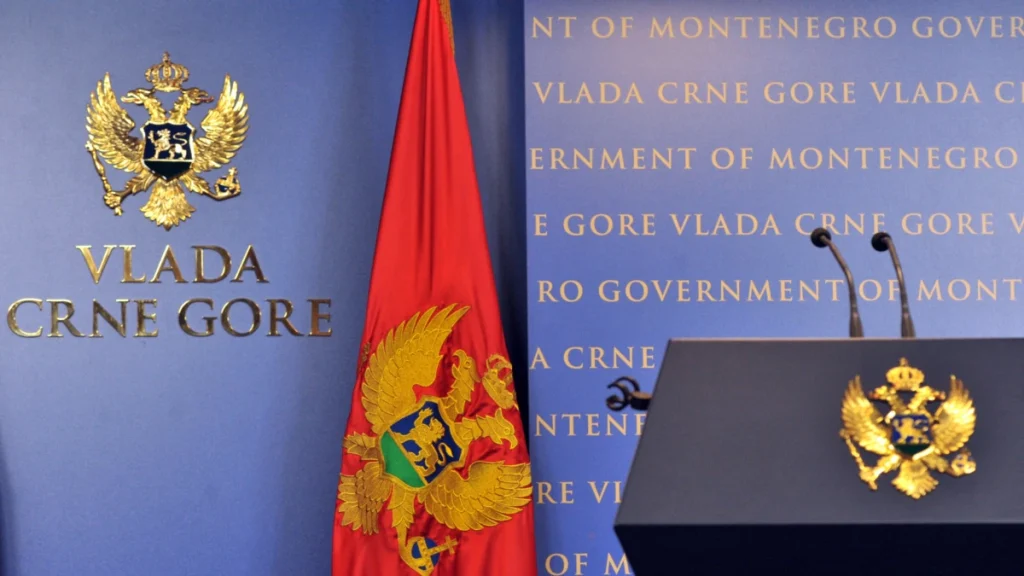
We have witnessed that, both in the past and today, individuals chosen as ministers in Montenegro often lack education or professional background related to the departments they lead. The decisive factor in their selection tends to be party affiliation, and this government is no exception.
The change of government in 2020 happened under the influence of many factors, but it is unquestionable that citizens wanted to end practices associated with the DPS regime and establish a meritocratic approach to employment, where every advancement in public administration would truly be based on fulfilling all criteria set out in various competitions.
“Unfortunately, the past three years have shown us that political entities have completely continued these practices at both the local and national levels. As a result, reforms—especially in public administration—have not been implemented, leading to stagnation or even regression,” Pejović points out.
He emphasizes the importance of appointing experts and competent individuals with long-standing experience to ministerial positions.
“If you have people lacking managerial capacity, you cannot expect results. Even if they have experience in the field, if they don’t know how to lead teams, everything related to team management will simply be absent. Our public administration is very bulky, and while it is true that optimization is needed, if candidates for ministerial positions don’t meet the requirements, their work will be limited to fulfilling the party agenda, and the general interest will not be the focus. Past experience has shown that in such cases concrete results are lacking, and new strategies and action plans are repeatedly created that remain dead letters on paper,” Pejović believes.
Asked to comment on the composition of the new government and whether he thinks the ministers are qualified enough to deliver results and bring progress to society, Pejović responds that the situation in Montenegro has been worrying for some time and requires profound reforms to achieve tangible progress.
“A number of ministers barely meet the criteria even for positions as independent advisors, let alone for ministries. When the list of ministers and their brief biographies was published, it was clear that some had almost no professional references to justify their appointment. This shows that people are politically appointed, often as party loyalists rather than as experts. I believe the first 12 months will be a period where most ministers get acquainted with the public administration and only then realize their responsibilities for individual sectors,” Pejović notes.
He fears that society has not yet reached the level of development and awareness to truly choose competent individuals. He notes that the population has become accustomed to party affiliation being the entry ticket for nearly every public administration position.
“Public opinion research related to political and civic participation shows that we are at a very low level when it comes to involvement in decision-making processes. People are uninterested because by voting in electoral cycles, they legitimize such appointments. When we reach a level of development and awareness where citizens punish political entities that operate this way, then we will see hiring done based on meritocratic principles. I believe this is a difficult process and that the new political transition in Montenegro should highlight the importance of the civil sector in raising citizen awareness that party affiliation should be the last—or nearly non-existent—factor when it comes to advancement or employment… As long as we have a vicious cycle of citizens joining political parties mainly to gain benefits, especially employment, we will continue to see such games and behavior regarding appointments in public administration,” Pejović says.
He stresses that as a society we must demand that institutions be independent and strengthened, and that they monitor the work of ministers responsible for the decisions and measures they enact.
“If you do not have competent people, the decisions and measures they make—or fail to make—are highly questionable, reflecting a state of concern, and all this can negatively affect our country’s European path,” Pejović concludes.