Although politicians in Montenegro, during election campaigns and in signed international initiatives, promise to make all important decisions in the interest of citizens through active communication with them, in practice, for years, the will of individuals has prevailed—often resulting in long-term consequences for society as a whole.
The most recent example of poor communication relates to the Draft Law on Amendments to the Law on State Property, which, following an already well-established practice, was adopted by the Government during a telephone session in mid-June, followed by controversial amendments that triggered a strong public backlash.
However, to this day, citizens have not been given a clear explanation of how potentially harmful it is to lease state property for 90 years, nor how much that land is actually worth, especially if, after the contract expires, buildings that remain on it are owned by the investor.
It is also highly problematic that such an important issue is being discussed by politicians in the middle of the holiday season, thereby not only avoiding institutional dialogue but also skillfully bypassing any quality debate in the most-watched television formats.
It is clear that the political elite have forgotten that, in addition to the Montenegrin public, they also committed to transparency before the international community by signing the “Open Government Partnership” initiative—an initiative that has remained nothing more than a dead letter for over a decade.
The core issue is clear: decisions about public property must be made collectively, and the more informed the public is, the less room there is for intrigue.
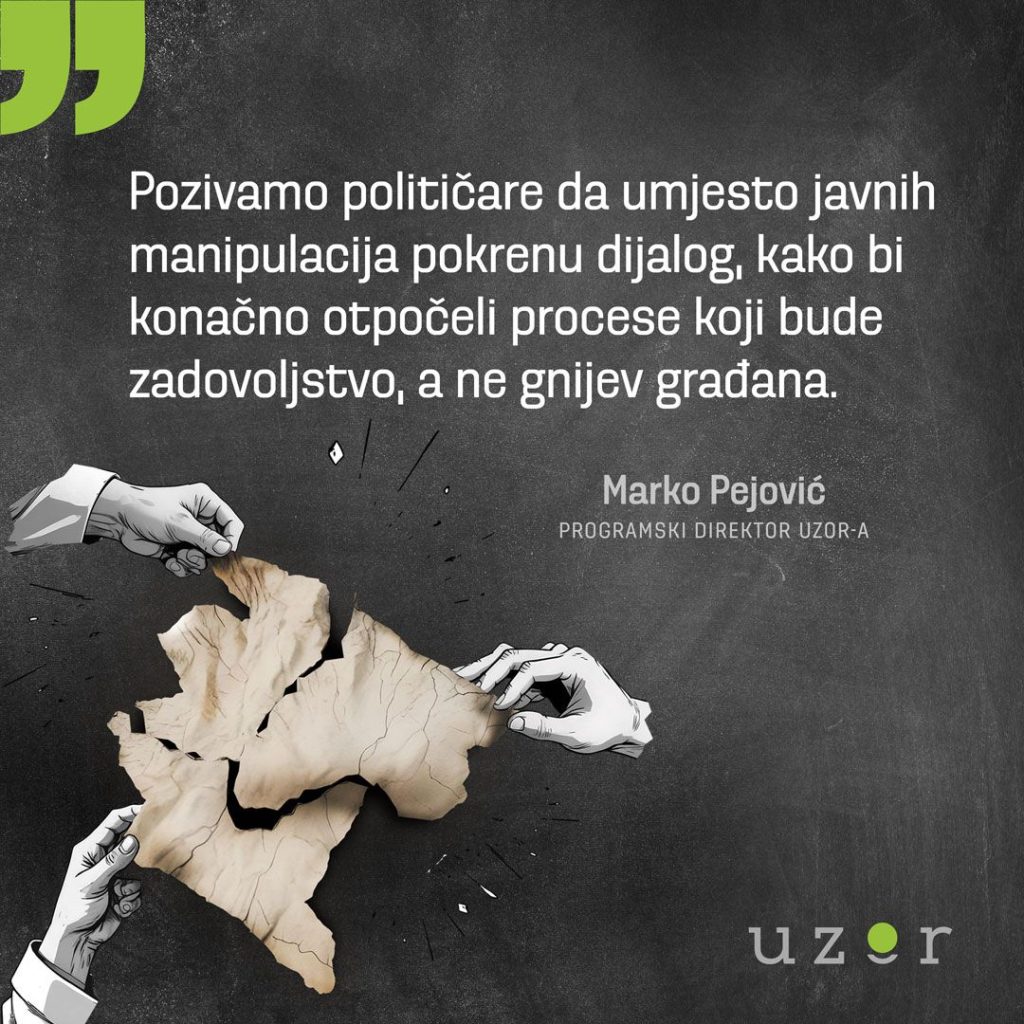
We call on politicians to replace public manipulation with public dialogue in order to finally initiate processes that generate satisfaction—not anger—among citizens.
Marko Pejović,
Program Director of UZOR