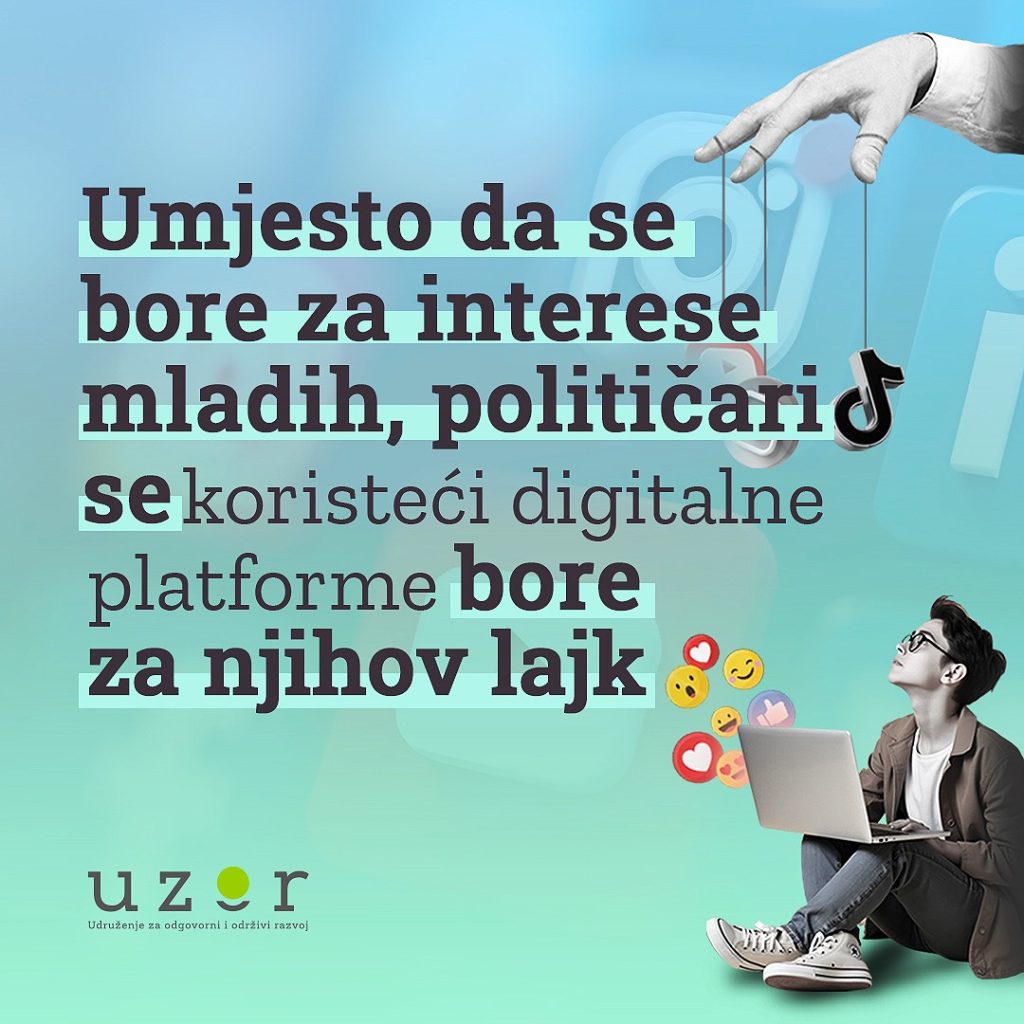
Politicians in Montenegro, instead of addressing the real issues facing young people, are using digital platforms to gain their likes, as is evident in the rhetoric leading up to the Podgorica elections on September 29.
Modern communication channels, which should foster greater awareness and political literacy among younger generations, are being systematically misused. Rather than using digital platforms and technologies to enhance democratic participation, provide transparent information on programs, and encourage discussions about them, the current campaign is grounded in personal attacks against opponents. As is typical, the harshest insults come from political entities with a shared history. As a result, citizens are left without the democratic discourse necessary to clearly understand who is shaping their future and quality of life.
Once again, political and civic engagement of young people on digital platforms is missing because these platforms are not being used by political parties to connect and communicate with the very people they aim to represent. Instead, they are often used to amplify a divisive and inappropriate rhetoric, far removed from professional promises.
Local issues concerning traffic infrastructure, parking shortages, water supply, and cleanliness are being subtly overshadowed by “nationally significant” topics. Meanwhile, avant-garde but impractical promises remain a staple of media presentations by leading candidates, as well as by the president, prime minister, and various ministers.
It’s evident that politics in our country has long become a refuge for individuals who seize every opportunity to overstate their importance, firmly championing partisan over public interests, with digital platforms nearly exclusively serving these ends.
Therefore, we call on the participants in the upcoming local elections to ensure that in the final stages of the campaign, citizens are not held hostage by private, tasteless quarrels. We urge them to engage in respectful exchanges, to acquaint the public with their four-year plans and programs, and to prioritize genuine dialogue with the electorate.
Marko Pejović, Program Director at UZOR